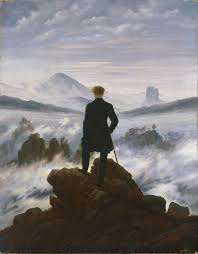
“Sirs! You can all be members of parliament, you can be ministers, and moreover, you can be the president; but you cannot be an artist.” — Mustafa Kemal Atatürk, 11 April 1930
My Years as an Art Student in the UK
As my readers know, I am keen on writing analyses of fiction. However, three days ago, I decided to change my style and write about something I have experienced during my three years in the UK. In some ways, this is my own story.
Those who have known me since university will know that I have always wanted to be a storyteller, especially by writing stories for films, TV, comics, video games, and other mediums. Furthermore, I had a dream of becoming number one, not just in my home country but in the entire world. I pursued that dream and was accepted into one of the prestigious universities in the UK: the University of East Anglia, with my TV pilot, Cyberfood. I couldn’t have imagined that I would be the only student from Turkey studying that particular subject at UEA.
I thought I had an enormous gift for creating compelling, out-of-the-ordinary stories with deep and bold characters. I still have some ideas, but for reasons I don’t yet understand, my mind somehow convinced me that I was no longer capable of writing stories. This feeling stayed with me throughout my master’s degree. I couldn’t come up with a single idea, even though it had previously been as easy as taking candy from a baby. I couldn’t think of themes, structures, dialogue, or characters. My mind had become a void where no light of storytelling could exist.
This mental struggle affected me deeply. It made me depressed and anxious because storytelling was part of my identity, and I felt as though I had lost my essence, my very purpose in life. After some time, I decided to examine my thoughts and research what I was experiencing. It turned out that what I was going through was associated with something called imposter syndrome. Bizarre. I had never felt like an imposter in my life until then.
Although I was suffering from creative block, some of my classmates were also struggling with their writing. I understand that every story can have a dramatic impact and hold a particular significance for a specific audience, but does that mean we should stick to the same clichéd storylines and characters? Drama in enormous villas and gardens, family drama, family drama with a little more romance… Whenever I wrote something more ambiguous or unconventional, I felt embarrassed. For example, I once came up with a superhero called Dickman, whose superpower was using his, you know, what as a sword. The main conflict involved his honeymoon with his wife, during which he had to prevent her from discovering his secret identity while also trying not to hurt her during any particular encounter.
But isn’t this the kind of thing a creative person should be able to come up with? We should be bold and free ourselves from the fears and doubts that come from other people’s opinions. There were perhaps four people like me who were seeking originality and something different in their work.
In addition to the similarities in their storylines, I noticed another bias: their attitudes towards different mediums and genres. We were assigned a group project, and I ended up working with people whose opinions differed significantly from mine. I suggested writing a horror story, and for the first time in my life, I encountered a creative writer who was afraid of writing a horror script.
But why? Any genre can teach you different approaches to storytelling and inspire you to write fiction from a different angle. I have never restricted myself by saying, “I will only write horror and sci-fi.” Those are my preferences, but I have never considered them mandatory choices.
Seeing these limitations among my former classmates was disappointing. Perhaps they were afraid of offending someone. However, as a friend of mine said recently, everyone is responsible for their own emotions. I believe that the possibility of offending someone should not automatically prevent us from expressing ourselves creatively. Of course, this does not mean we should be deliberately cruel or dismissive of others, but being afraid of every possible reaction can become another obstacle to artistic freedom.
I spoke with some of my fellow artists and people I genuinely trusted, hoping they could help me. But nobody could really help me overcome what I was experiencing. So I decided to work through it myself by writing without listening to the fears and doubts inside my head.
Somehow, it worked. I produced several promising scripts that could lead to bigger projects in the future. Nevertheless, the experience left a wound: the possibility of getting stuck again, the possibility of experiencing writer’s block once more. This was the first time I truly understood how difficult it could be to be an artist.
My Industry Experiences in Film and TV
Living in the UK is challenging for everyone, not just artists. I was looking for a part-time job, but as an international student, I felt that I didn’t receive as much support as local students did. I was rejected hundreds of times, which led me to believe I was a failure. But I wasn’t. I was simply struggling within a broken system in which everyone is looking for jobs that do not seem to exist for everyone.
Then, during my spring break, a production company from Monaco recruited me as an intern. Since I was an intern, they told me they wouldn’t pay me unless one of their projects was sold. I was too naive at the time and said, “Sure, why not?”
I worked in the marketing department to promote their projects. I was repeatedly neglected by my superior for reasons I could not fully understand, although I suspected my nationality might have played a part. On one occasion, she asked me to read one of my scripts before telling me that nobody cared about scripts involving camels. It was a sci-fi story, by the way.
That was the end of my time there. I came to believe that the company wasn’t genuinely making films or TV programmes; it seemed more interested in presenting the appearance of filmmaking to attract money or funding.
After leaving that company, I started looking for other opportunities while continuing to write scripts. People kept telling me, “Go to networking events and meet people.”
For starters, I think this is one of the biggest lies in the industry. Yes, connections matter, but you also need some support and experience to get started. Networking only works when you have an initial connection to build upon.
I met plenty of people in the industry who seemed uninterested in creating art, which was astonishing to me. Their main reasons for entering the industry appeared to be fame, money, and power. I felt sick and exhausted by this atmosphere.
At one point, I even became frustrated with Christopher Nolan for saying that film education was a waste of time. I believe that without a proper education or an equivalent commitment to learning, some people may enter the industry without developing the critical skills that could help them see beyond their existing imaginations and assumptions.
Another opportunity came through my previous production company, which introduced me to a European client. He had a substantial documentary about wildlife on an island that was not supposed to be accessible to the public. He was reportedly only the second person ever to have done this.
Unfortunately, because he had made some poor decisions, his film had ended up on the shelf for years. A colleague and I tried to help him sell it. However, whenever we asked him to fund our work, he refused. He explained that many people he had paid over the years had let him down.
I could understand his perspective, but the arrangement wasn’t fair to either of us. We were expected to help him move his project forward without receiving the support necessary to do so.
My greatest disappointment in the industry came from a production company that agreed to turn my script into a feature film. Who would say no to that? Certainly not me.
As an international artist in the UK, sometimes it feels as though you need to win an Oscar or a BAFTA just to stay here. Perhaps I would have won one with this film. (No, just joking.)
I had arranged the location, secured the main actor, written the script, and decided to direct the film. The producer’s main responsibilities were to secure funding and organise catering, casting, and the crew. Basic responsibilities for a producer, right?
Then I realised that his methods were unorthodox and, in my view, morally wrong. Nobody would be paid; instead, everyone would receive credits and a share of the distribution revenue, which amounted to just five per cent under the arrangement we were discussing. We were an independent production without the necessary funds, but I began to question whether this was a fair or sustainable way to make a film.
After conflicts with actors and increasing disorganisation, I realised that my script was at risk of becoming a disaster. I terminated the agreement and decided to pursue other production opportunities.
However, the producer decided to develop his own story using my final script, changing the names and the title. From my perspective, he was using my work without properly acknowledging what had happened between us.
This was another shock. I never expected to encounter such a situation in a city like London, or to discover how readily some people in the creative world might accept these realities.
Taking advantage of someone’s fears and desperation is one of the most unethical things a person can do. This was another difficult lesson in what it means to be an artist.
My Further Artist Life in the UK
I have decided to become a teacher and continue doing this job for a long time. I love teaching and seeing people happy. I love my co-workers and my boss. After everything that happened to me, I finally experienced support and care in the workplace.
Does this mean I have stopped being a writer?
Quite the contrary.
Every day, I find inspiration in the events and incidents that happen around the office. Whenever I teach something about Life in the UK, I learn about historical figures and events I had never heard of before. Conflicts, tragedies, and dramas… I hear stories, and I find myself creating dialogues in that office. It is incredible.
Every day when I wake up, I feel grateful for the opportunity I have been given.
I have mentioned the negative aspects of being an international artist, but there are also undeniable positives, especially when you have the chance to meet genuine artists.
A couple of months ago, I met someone who, at the time, I didn’t realise would become a very important figure in my life in the UK. She cares about artists and supports them no matter what. She doesn’t hold back her opinions and speaks her mind directly. She loves theatre, films, and acting not for the reasons I have described earlier, but for the sake of being an artist.
And this is the kind of artist I wanted to meet: someone who cares about emotions, drama, thoughts, and the power of storytelling. She is the one who is pulling me back from the darkside of storytelling to the lightside of it.
She is struggling too, despite having talent and an award to her name. Nevertheless, I believe she will become the person she has always dreamed of being. She inspires me whenever I feel emotionally defeated. I feel very lucky to have met her, and I hope we will continue working on projects together in the future.
Another person who inspired me was a director who came to the UK from Turkey. He didn’t immediately start making films when he moved here. He had a family to support and needed to take care of them.
He showed me photographs of himself working in a factory, where his job involved packing deliveries. He told me that his experience in that factory had expanded his understanding of storytelling. He encouraged me to find other ways to experience life, whether by working in a club, teaching, selling milk, or doing something else entirely, while continuing to create art that reflects those experiences rather than relying solely on imagination.
Suffering, hard work, and conflict can make great stories and shape great artists.
I have no intention of becoming a new Kafka, but I think these words capture the true meaning of being an artist.
When a great thinker like Atatürk spoke about the nature of an artist, I interpreted his words as suggesting that artists are people who can reach a certain level of intellectual depth and see beyond the shadows inside Plato’s cave.
I still believe that. But I have also come to understand something else:
Artists are people who bear great suffering but never give up because of their love of creating art, without constantly seeking validation, recognition, or understanding from others.
And so, I would like to contribute a new perspective to the ongoing debate about “art for art’s sake” versus “art for society’s sake”:
Art for thyself.
Thank you for reading.
YOK